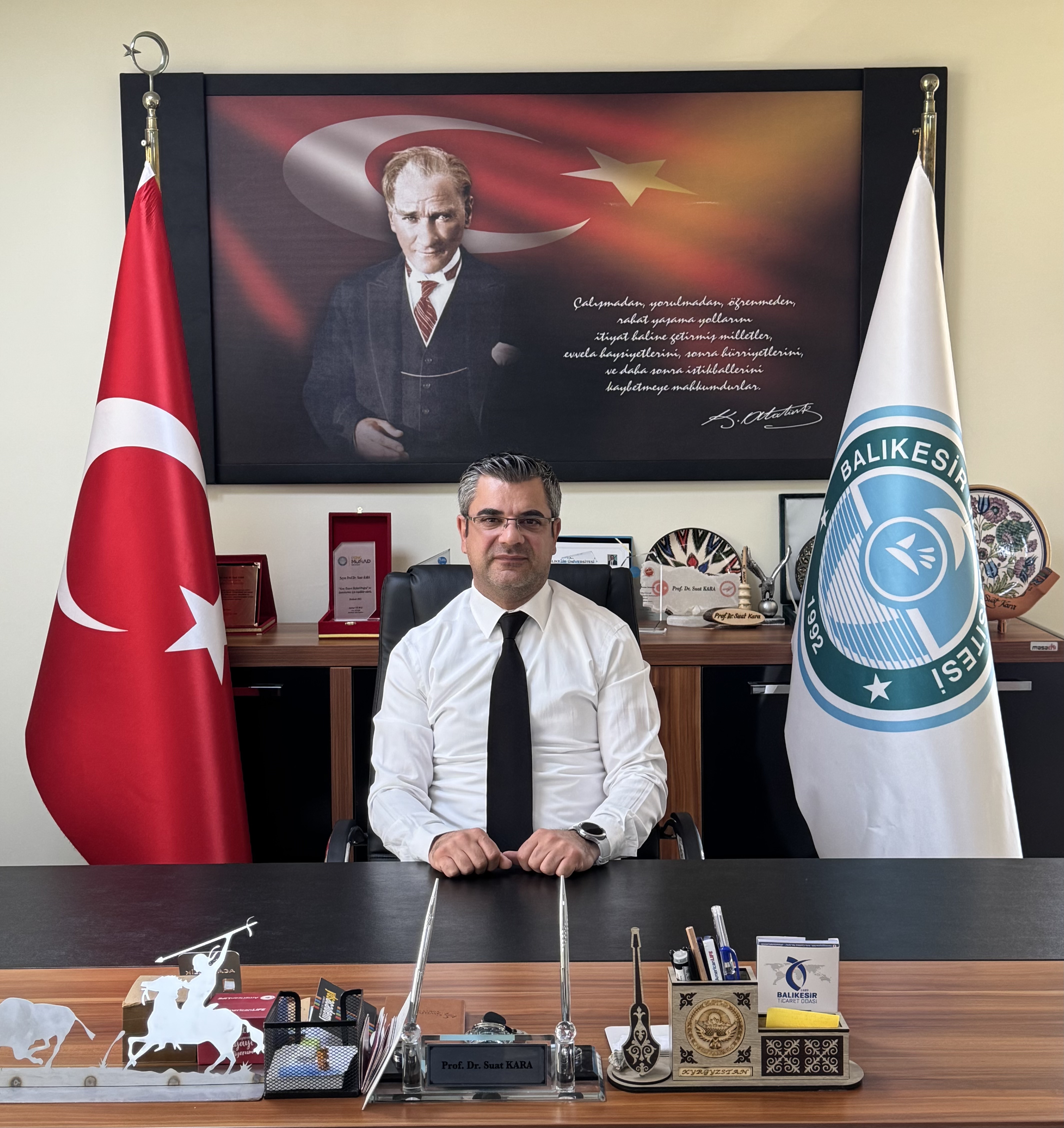
On behalf of Balıkesir University Faculty of Economics and Administrative Sciences, Department of International Trade and Logistics, I extend my respectful greetings to you. The transformation accelerated by globalization necessitates new approaches across many fields, from business management to supply chains, from customs procedures to digitalization. International trade and logistics are disciplines that shape countries’ competitiveness, guide firms’ sustainable growth, and play a strategic role in the functioning of global value chains. With this awareness, our department aims to educate qualified human capital that can read change accurately, think analytically, and take an active role in multi-dimensional decision-making processes.
Our educational philosophy is built on a student-centered, competency-based framework that prioritizes practice. We consider it essential that our students become individuals who not only access information, but also analyze it, interpret it, and transform it into outputs. In this direction, we provide a strong academic foundation in areas such as international trade regulations and practices, foreign trade operations, logistics management, customs procedures, insurance and risk management, supply chain planning, cost and financial processes, data-driven decision-making, and digital business models. We also view the development of transversal skills—such as communication, teamwork, problem-solving, ethical awareness, and professional responsibility—as an integral part of our education.
International trade and logistics are complementary disciplines that gain meaning together and determine competitive advantage. Therefore, our department seeks to provide students with an integrated perspective through an interdisciplinary approach. Our fundamental goal is to graduate professionals who can analyze processes from procurement to production, from warehousing to distribution, from sales to after-sales services; understand the requirements of competition in international markets; master documentation, transaction and process management; anticipate risks; and strengthen strategic thinking skills.
Our curriculum is regularly updated in line with national qualifications frameworks and sector expectations, balancing theoretical foundations with practical components. Courses are supported through case analyses, current trade disputes, Incoterms and payment methods, simulations, project-based assignments, and data analytics practices. In this way, students gain not only conceptual knowledge but also the competence to define real business problems, develop alternative solutions, and justify decisions. In parallel with the needs of an increasingly digital business world, our program also covers e-commerce and digital marketplace dynamics, technology use in logistics, traceability, sustainable supply chains, and green logistics.
A key dimension of our student-centered approach is guidance and career planning. Through seminars, sector talks, alumni meetings, technical visits, and internship opportunities, we encourage our students to expand their professional networks and clarify their career goals. Interaction with firms and institutions operating at regional and national scales—including logistics service providers, customs brokerage companies, banking and insurance institutions, and public bodies—enriches the learning experience and supports a smoother transition into professional life. The diversity of employment opportunities for our graduates is a concrete indicator of our program’s multi-dimensional structure and the competencies it provides.
The academic vision of our department is to complement high-quality teaching with a strong research culture. Our academic staff conduct scientific studies in areas such as international trade policies, foreign trade finance, logistics network design, supply chain risk management, digital transformation, sustainability, and regional development, aiming to contribute to the literature through publications in national and international indexes. Alongside benefiting from the university’s research infrastructure, we attach importance to strengthening collaborations with other universities, research centers, and sector stakeholders. Involving our students in research processes is one of our key priorities, fostering scientific curiosity and critical thinking.
Moreover, within the framework of quality assurance and continuous improvement, we implement assessment and evaluation processes in a transparent, fair, and learning-supportive manner. We regularly monitor the alignment between course outcomes and program outcomes, and reflect student feedback and stakeholder opinions in our educational design. Our aim is to educate professionals who adhere to ethical values, possess a strong sense of social responsibility, can interpret global competition while safeguarding national interests, work effectively with different cultures, and embrace lifelong learning.
As the Department of International Trade and Logistics, we invite you to a learning environment that connects knowledge with competence, integrates theory and practice, and evaluates local dynamics through a global perspective. With the achievements of our students, the contributions of our alumni, and the support of our stakeholders, we will continue to strengthen the academic and social impact of our department. I am pleased to be on this journey with you and wish all our students a productive, successful, and high-quality educational experience.
Sincerely,
Prof. Dr. Suat Kara
Head of Department